A fragrance family is a category that groups perfumes by their dominant character — floral, woody, fresh, and so on — the same way a color wheel groups red, orange, and yellow as “warm” colors. It’s not a marketing label. It’s a classification system that lets you predict, roughly, how an unfamiliar perfume will behave before you ever smell it, just from knowing what family it belongs to.
The system most of the fragrance industry still uses today traces back to a specific person and a specific year: perfumery taxonomist Michael Edwards published his Fragrance Wheel in 1992, building on earlier attempts — including a 1949 “Odor Effects Diagram” by Paul Jellinek — to solve a real problem: department store sales floors were chaos, and staff needed a shared map to point confused customers toward something they’d like. Edwards’s wheel arranges families in a circle, and families that sit next to each other on the wheel share overlapping characteristics — a deliberate design choice, not a coincidence.
The 7 Families You’ll Run Into
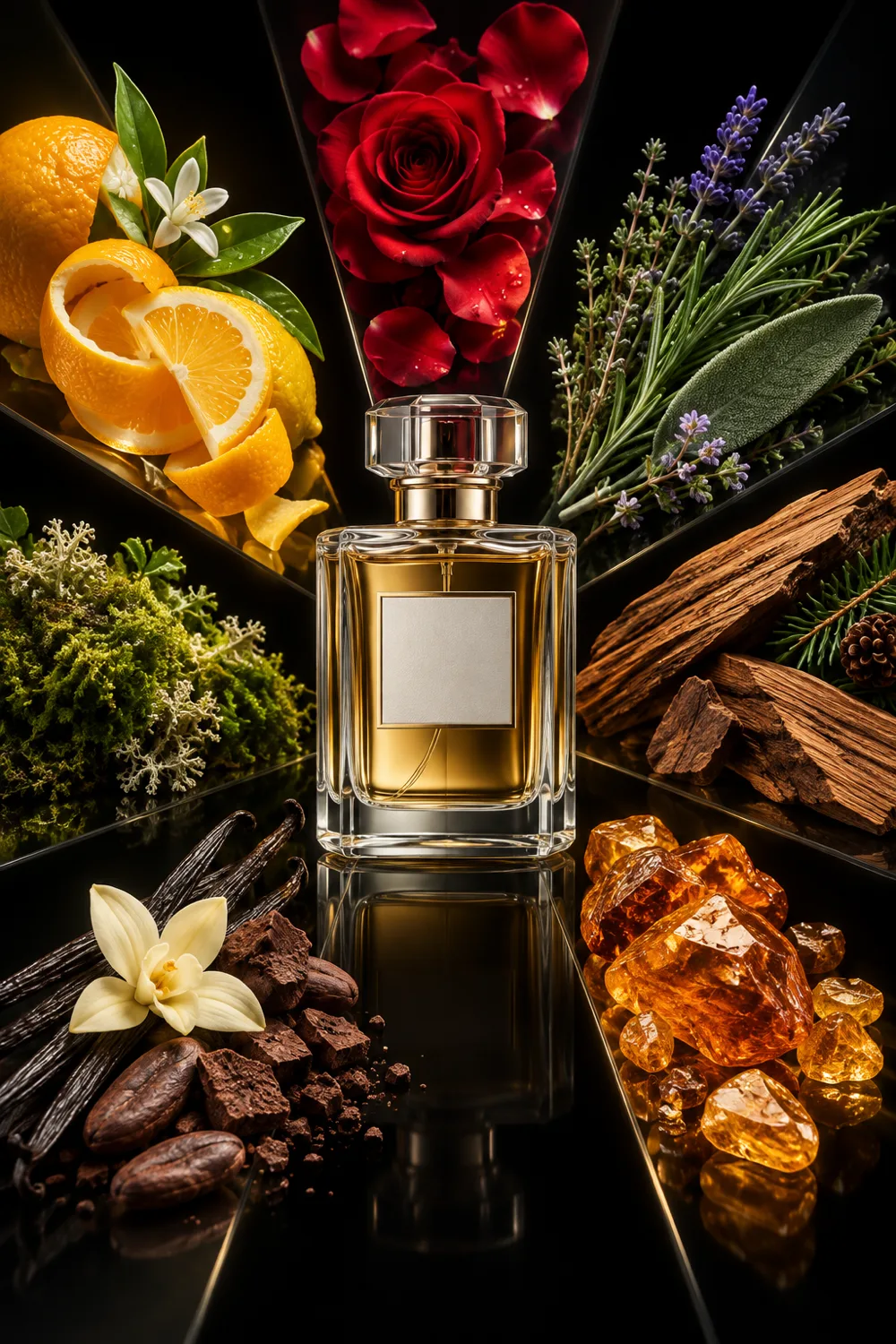
Most consumer-facing breakdowns of the wheel condense down to seven practical categories. Here’s what each one smells like and where you’ve probably encountered it before.
1. Floral
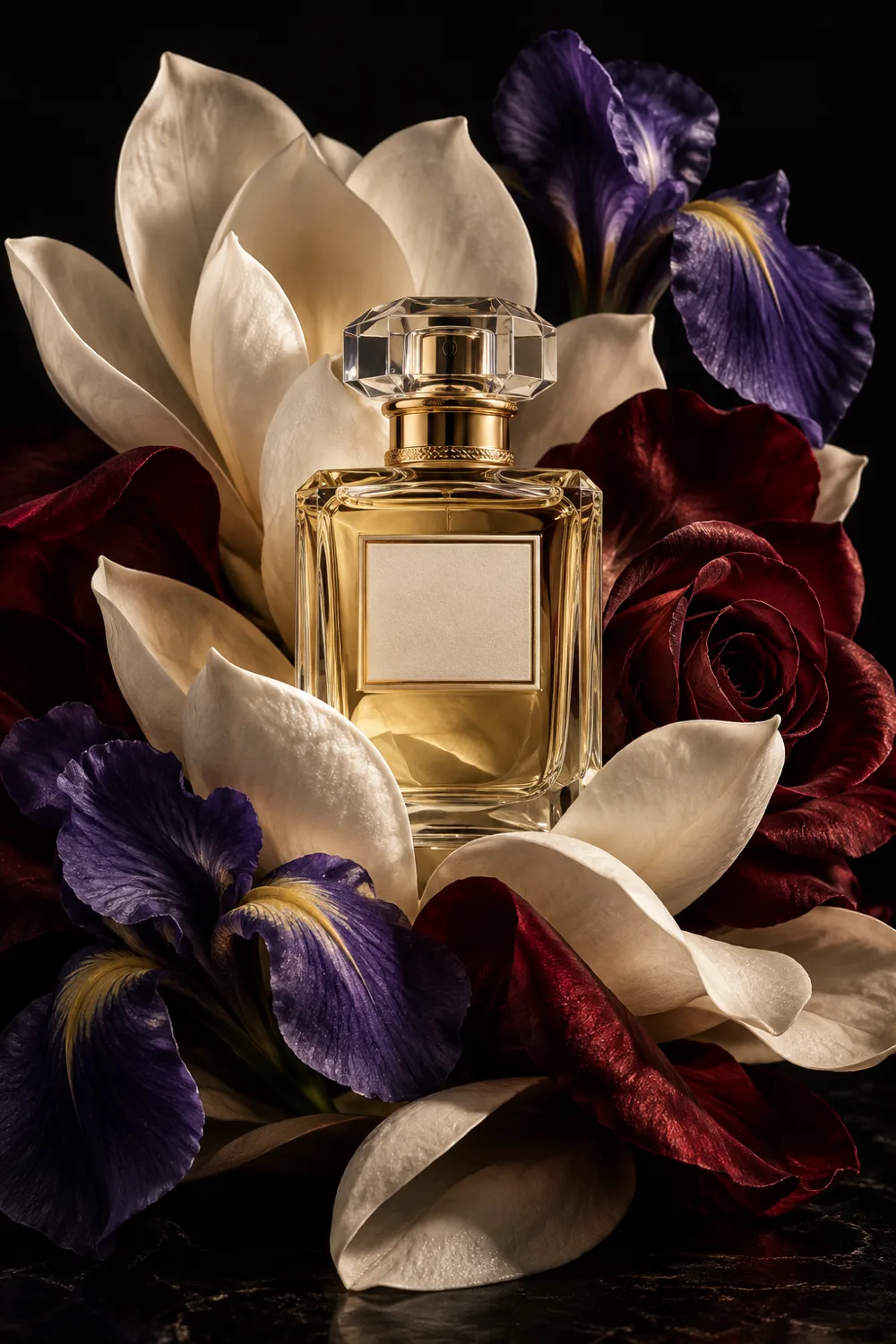
Built around real or abstracted flowers — rose, jasmine, lily of the valley, peony. This is the largest family by far and the one most new perfume releases fall into, ranging from a single “soap-clean” floral note to dense, layered floral bouquets.
2. Oriental (also called Amber)
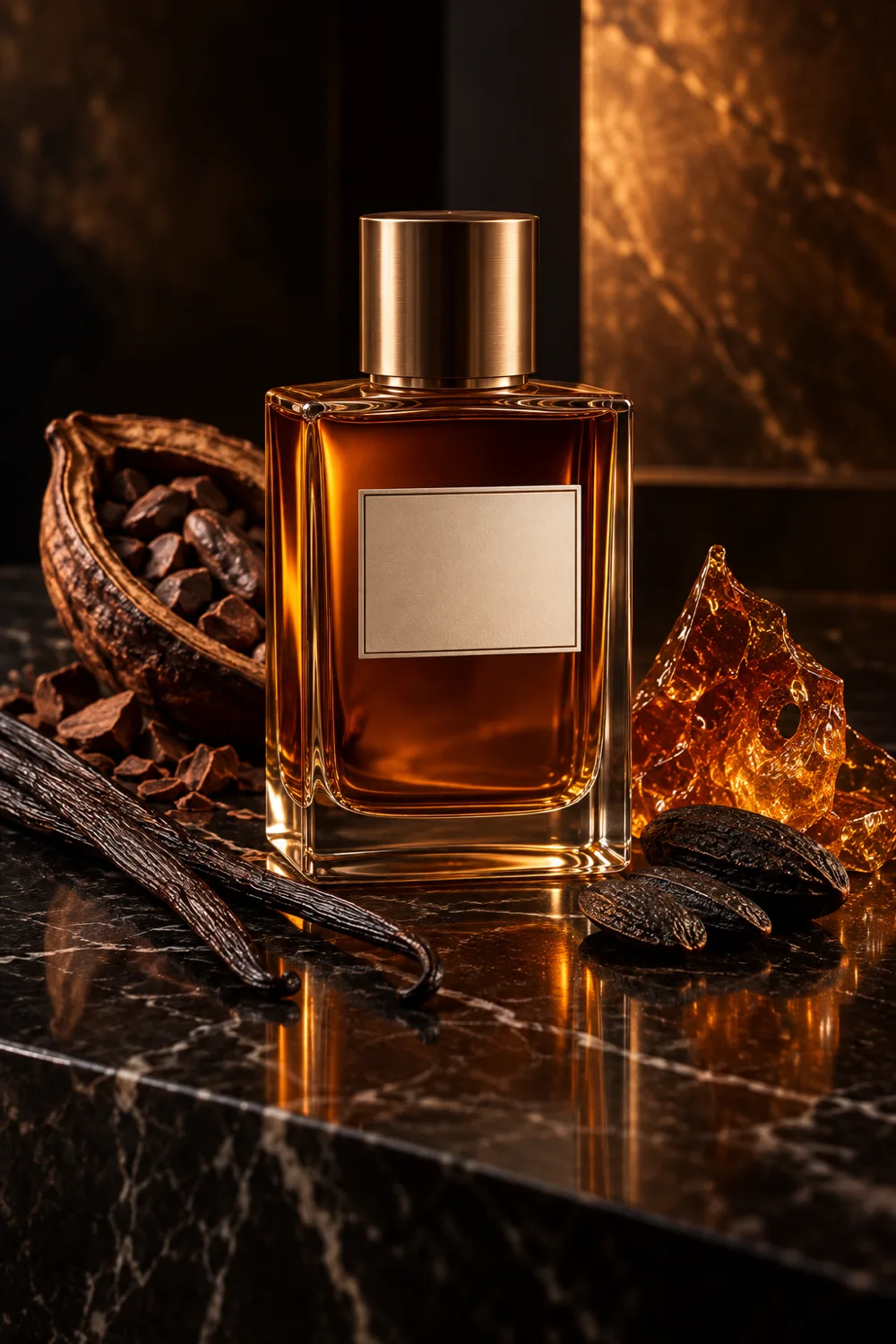
Warm, resinous, and often sweet — built around vanilla, amber, incense, and warm spices. These tend to be the fragrances people describe as “cozy” or “sensual,” and they’re usually the longest-lasting family on skin because their base materials are naturally heavy and slow to evaporate.
3. Woody
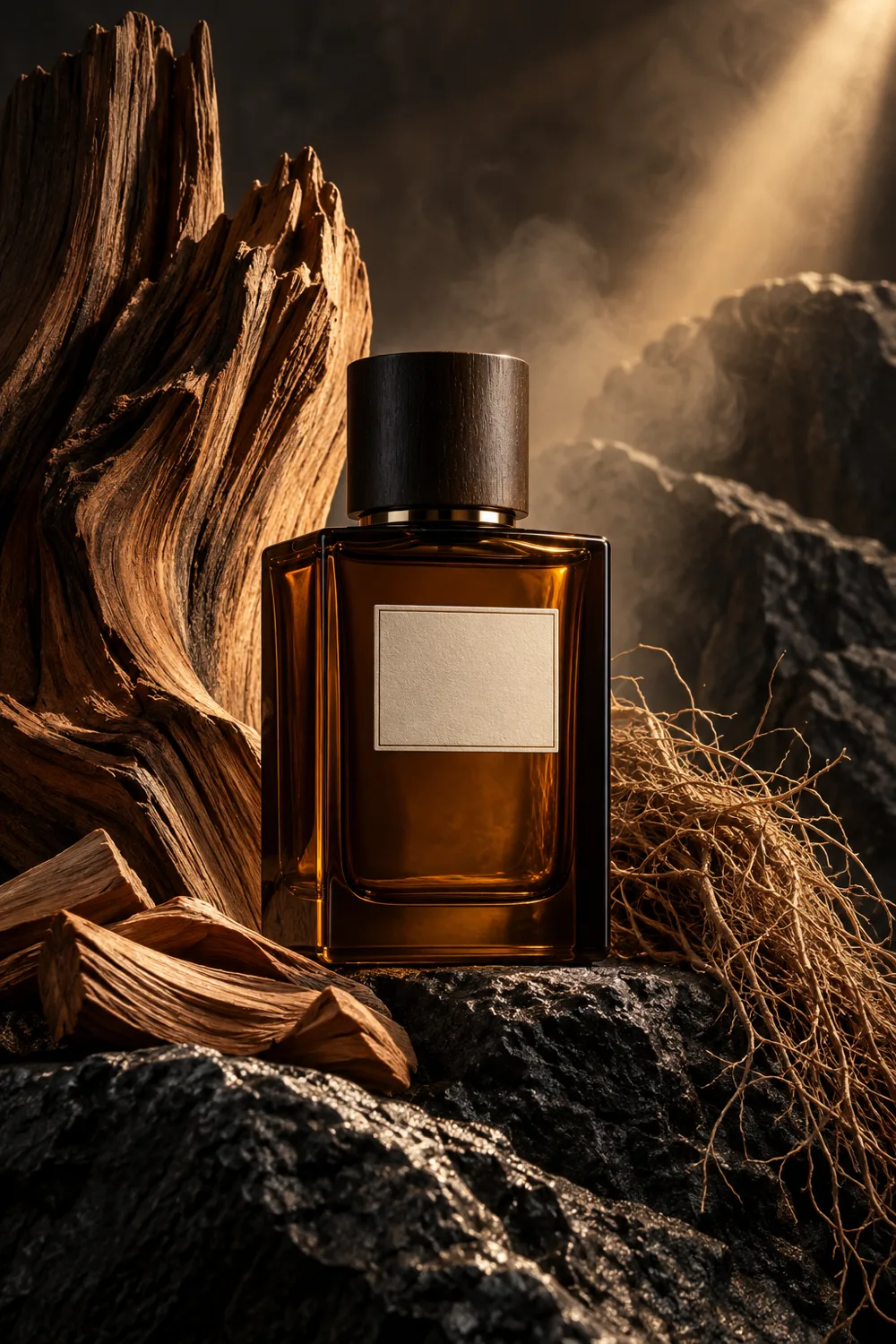
Sandalwood, cedar, vetiver, oud. Dry and grounded, more often used as the base for other families than worn entirely alone — a lot of florals and orientals lean on a woody base to keep them from feeling flat.
4. Fresh
An umbrella for aquatic, green, and citrus-adjacent scents that read as clean or outdoorsy, not sweet or warm. This is the family most associated with “spray and go” daytime wear because it tends to sit close to the skin.
5. Citrus
Sometimes folded into Fresh, but distinct enough to call out on its own: bergamot, grapefruit, lemon, orange. Citrus materials are naturally volatile — they evaporate fast — which is why almost every perfume that opens with citrus shifts into something else within the first fifteen minutes.
6. Chypre
Named after the French word for Cyprus, built on a classic structure of citrus top notes over an oakmoss-and-labdanum base. Chypre fragrances read as sophisticated and slightly severe compared to a straightforward floral — less immediately friendly, more “wait, what is that.”
7. Fougère
French for “fern,” though nothing in a fougère smells like fern — the name refers to the structure itself: lavender, coumarin (a hay-like, slightly sweet note), and oakmoss. This is the backbone of most traditional men’s fragrances, though there’s nothing inherently gendered about the structure — the same lavender-coumarin-oakmoss combination shows up constantly in fragrances marketed as unisex or women’s, too. For more on how little family and gender have to do with each other, see our guide to gender-neutral fragrance.
How Top, Heart, and Base Notes Work Inside a Family
Every fragrance, regardless of family, is built in three layers that unfold over time instead of all at once. Top notes are “perceived immediately on application” and consist of small, light molecules that evaporate quickly — citrus and light herbs are typical. Middle or “heart” notes emerge just before the top notes fade and form the main body of the scent; sandalwood and jasmine are common examples. Base notes appear closest to the departure of the middle notes and are usually not perceived until around thirty minutes after application — this is where amber, musk, and heavier woods live.
A fragrance’s family is usually determined by its base and heart notes, not its opening. A perfume can open with a bright citrus top note and still belong to the Oriental family, if what’s left after that top note fades is amber and vanilla. This is exactly the mechanic behind layering a citrus accent over an amber anchor — you’re borrowing another fragrance’s top notes to sit over a base that’s already doing the family’s real work.
Why This Matters When You’re Shopping
Once you know which family or two you gravitate toward, you can walk into buying a new fragrance — or reading its description online — with a real prediction instead of guessing from the bottle. If you know you like Oriental bases, you can skim past a fragrance described as “fresh aquatic” even if the marketing copy is appealing, because the base is going to read differently on you than the top notes promise. It also explains why two fragrances that smell completely different in the first five minutes can end up smelling almost identical three hours later — they may share a base even though their families, defined by that base, put them in overlapping territory.
This same logic is worth applying to the gap between niche and designer fragrance: family matters more to how something wears than whether it came from a mass-market brand or a small perfume house. A designer Oriental and a niche Oriental will have more in common with each other, structurally, than either has with a designer Fresh scent.
A Quick Way to Identify a Family You Don’t Recognize
- Smell it dry — on a strip or, better, on skin after 30 minutes, not straight from the bottle.
- Ignore the top notes entirely for this exercise; they’re not what defines the family.
- Ask: does the base feel warm and sweet (Oriental), dry and grounded (Woody), clean and sharp (Fresh/Citrus), or soft and powdery (Floral)?
- If it feels severe or slightly bitter alongside citrus, you’re probably looking at a Chypre.
- If it feels herbal-sweet and slightly hay-like, that’s the fougère structure at work.
Why the Wheel Is Shaped Like a Circle, Not a List
Edwards could have just published seven boxes on a page. He arranged them in a circle instead because the families bordering one another on the wheel share real olfactory characteristics — the groups aren’t sealed off from each other, they blend at the edges. Floral sits next to Oriental because a lot of florals lean warm and sweet; Fresh sits next to Woody-adjacent categories because green and aquatic notes often get paired with a dry base. That circular structure is also why subfamilies exist — “Floral Oriental” and “Woody Oriental” aren’t hedge terms marketers invented, they’re literally the named regions where two neighboring wedges of the wheel overlap.
Knowing this helps explain a common frustration: buying a fragrance described as one family and having it smell like it’s “leaning” toward another. That’s usually not an inaccurate description — it’s a scent that legitimately sits near a border on the wheel, wearing traits from both of its neighbors.
Family by Season, at a Glance
| Family | Typically strongest in | Why |
|---|---|---|
| Citrus / Fresh | Spring, summer | Light, volatile materials that read as clean, not heavy, in warm air |
| Floral | Spring, into early summer | Mirrors the season without fighting the heat the way a dense base can |
| Chypre | Transitional (early fall) | Sharp enough to cut through cooling air without tipping into full winter weight |
| Woody | Fall, winter | Grounded, dry base performs well against cold, dry air |
| Oriental / Amber | Fall, winter | Heaviest, slowest-evaporating base materials in the whole system |
| Fougère | Year-round | Herbal-sweet structure reads as fresh enough for warm months, warm enough for cold ones |
These are starting points, not rules — plenty of people wear a Woody scent in July on purpose. But if you’re building out a fall/winter rotation and don’t know where to start, leaning on Oriental and Woody families first is a reliable shortcut, precisely because of how those base materials behave.
Common Questions
Can a fragrance belong to two families? Informally, yes — plenty of real-world perfumes get described as “woody floral” or “floral oriental.” The wheel itself accounts for this with subfamilies that sit between two main categories, which is the whole point of arranging them in a circle instead of a list.
Is one family objectively “better” or longer-lasting than another? Not inherently better, but Oriental and Woody families do tend to last longer on skin than Fresh and Citrus families, simply because their base materials are heavier and slower to evaporate — worth knowing if longevity is what you’re optimizing for on a given day.
Do I have to pick one family and stick with it? No — most people end up with a rotation across two or three families instead of a single lane, especially once they start paying attention to how a family performs by season or occasion.
Once you can name the family behind a scent you already love, you’ve effectively got a search term for finding more of what you like — which is a faster path than reading marketing copy one bottle at a time, and a more useful one than shopping by brand name alone.