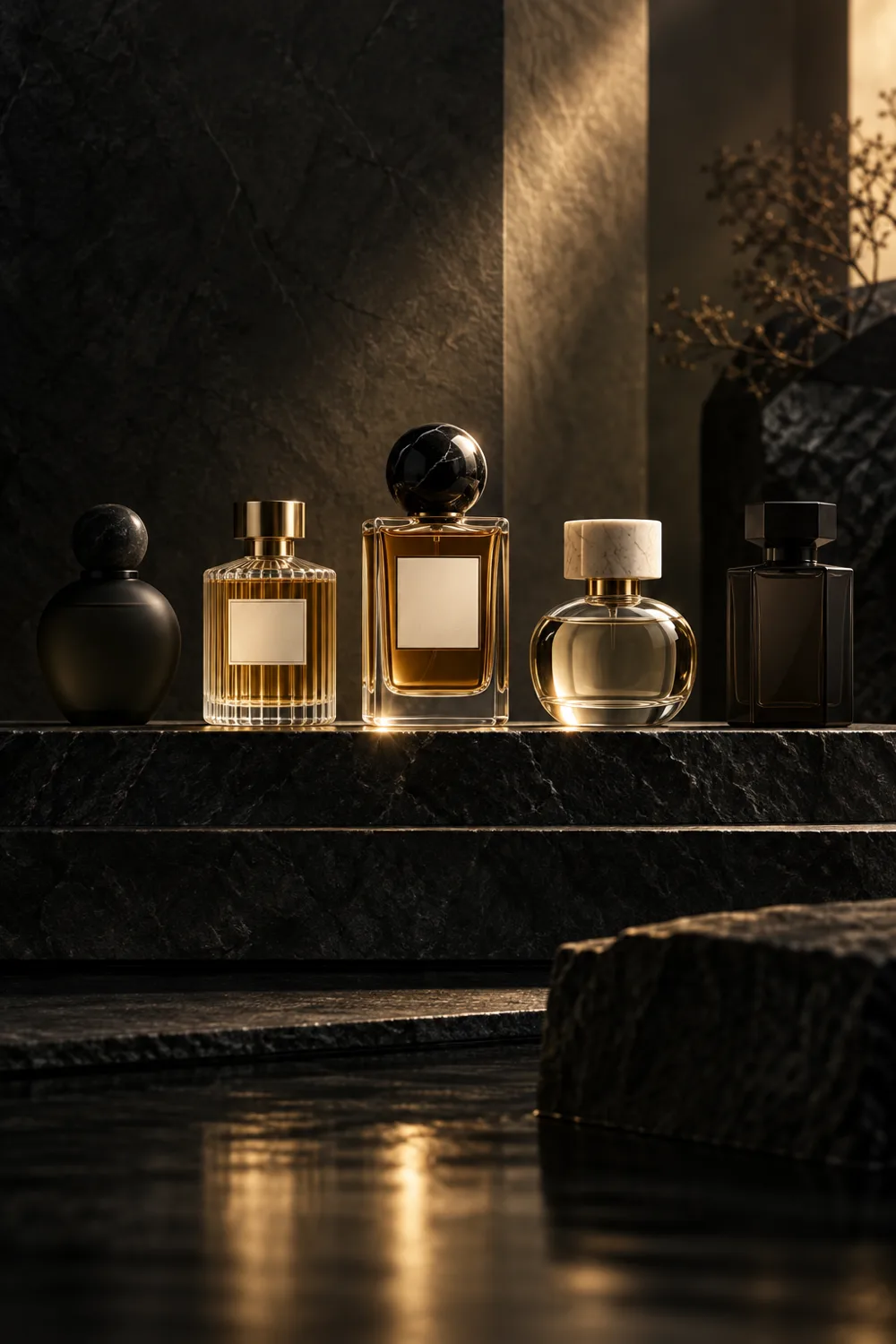
You probably didn’t set out to own twelve fragrances. It happened gradually — a gift here, an impulse buy during a sale, a bottle that seemed perfect in the store and turned out to be wrong once you got it home. Now you’re standing in front of a shelf wondering if you have too many, too few, or roughly the right amount, and there’s no obvious way to tell. This is a more common question than it might seem, and there’s a useful way to think through it that has nothing to do with an arbitrary number.
Why “the right number” isn’t a fixed number
Ask five fragrance enthusiasts how many bottles someone should own and you’ll get five different answers, because the question is usually being asked wrong. The right size for your collection depends on how many distinct contexts your life has — different seasons, different settings, different moods you want to be able to match — not on a target count that applies to everyone equally. Someone with a highly varied schedule (formal work events, an active outdoor hobby, frequent travel) needs more range than someone whose week looks nearly identical day to day.
A more useful question than “how many”
Instead of asking how many bottles you should own, ask how many distinct roles your current collection fills — and whether every bottle you own is filling one. A collection of three where every bottle gets worn regularly and serves a clear purpose is in better shape than a collection of fifteen where ten of them haven’t been touched in a year. Count matters far less than the ratio of bottles to actual use.
A practical range, for people who want a number anyway
| Collection size | What it usually looks like |
|---|---|
| 1-3 bottles | A workable minimum — covers daily wear and maybe one context switch. Fine if your life doesn’t vary much. |
| 4-8 bottles | The range where most people land once they’ve built out daily, seasonal, and occasion-specific options. Enough range without becoming hard to manage. |
| 9-15 bottles | Enthusiast territory — starts to include exploratory or collector pieces alongside the functional ones. Worth an honest audit of what’s in regular rotation. |
| 16+ bottles | Collection territory, where the goal has shifted from “cover my needs” to “enjoy the hobby of fragrance itself” — a legitimate goal, but a different one from practical wardrobe-building. |
None of these ranges is more correct than another. What matters is whether your range matches your actual goal — building a functional wardrobe, or pursuing fragrance as a collecting interest in its own right. Both are fine; they just call for different approaches to buying.
The honest inventory test
Line up every bottle you own and sort into three piles: worn regularly, worn occasionally but for a real reason, and untouched for six months or longer. That third pile is the number that matters most. It’s not a judgment — plenty of good reasons exist for an untouched bottle (a gift that isn’t your taste, a seasonal scent waiting for the right month) — but a large third pile relative to your total collection is a sign the collection has outgrown what you’re using, regardless of whether the total count sounds reasonable on paper.
Signs you might own too few
- You wear the exact same scent to every context — work, evenings, workouts — because there’s no alternative.
- You’ve noticed the same scent feels wrong in certain settings but have nothing else to switch to.
- Your one bottle is running low and replacing it feels like a bigger decision than it should, because your whole routine depends on it.
Signs you might own too many
- A meaningful portion of your shelf hasn’t been opened in over a year.
- You can’t confidently say what makes several of your bottles different from each other in actual wear.
- You’ve bought a new bottle recently mostly because it was on sale or trending, not because it filled a real gap.
- Finding “the right one” for a given day has started to feel like a chore instead of a small daily pleasure.
What to do with a collection that’s grown past what you use
If the honest inventory reveals a large untouched pile, a few options beyond just letting them sit: try reintroducing one or two into rotation deliberately instead of defaulting to the same daily pick, consider whether a couple simply don’t suit you anymore and could be given away or sold through a fragrance swap community, or simply accept that a small “just in case” reserve is fine as long as it’s not the majority of the collection. There’s no obligation to use every bottle equally — the goal is making sure most of the collection is earning its place.
Building toward the right size deliberately
Instead of buying reactively, it helps to think in terms of roles: a daily default, a distinct option for a different context, something for scent-sensitive settings, maybe a seasonal piece or two once the fundamentals are covered. Our guide on building a 3-scent capsule wardrobe lays out a specific starting framework if you’re rebuilding from a smaller base, and our guide on building a fragrance wardrobe without overspending covers the budgeting side of expanding past that starting point.
How collection size interacts with layering
A small, well-chosen collection can go further than the raw count suggests once combination is part of the picture. Three scents used only one at a time cover three distinct impressions. The same three scents, layered and combined deliberately, can cover considerably more ground — every pair (and sometimes every trio) becomes its own option, not just each bottle on its own. This is worth factoring into the “how many do I need” question directly: a smaller, more combinable collection can outperform a larger one made up of bottles that don’t interact well with anything else on the shelf.
Put differently, two collections of the same size aren’t automatically equal in range. One built from three fragrances that all share some common ground and combine cleanly offers more practical variety than one built from three unrelated, hard-to-pair bottles that only ever get worn solo.
The gift-bottle problem specifically
A large share of “too many, mostly untouched” collections trace back to gifted fragrance more than anything bought deliberately. Gifts are well-intentioned but are, by definition, someone else’s guess at your taste — and even a thoughtful guess misses more often than a purchase you made yourself after testing. It’s worth separating gifted bottles from self-selected ones during an honest inventory, since a shelf full of self-chosen bottles sitting mostly unused is a different (and more worth addressing) problem than a shelf padded with a few well-meaning but mismatched gifts. The second case isn’t a collection-size problem at all — it’s just a handful of items that happen to occupy shelf space without needing to factor into how you think about your actual working wardrobe.
A worked example
Someone with eleven bottles does an honest inventory and finds four in regular rotation, three worn occasionally for real seasonal reasons, and four untouched for over a year — two gifts that never suited their taste, and two impulse buys from sales. The functional collection is seven bottles, not eleven. The four untouched ones aren’t a crisis, but they’re also not doing anything for the wardrobe — a reasonable next step is passing along the two mismatched gifts and being more deliberate before the next sale-driven purchase, instead of adding a twelfth bottle to a collection that’s already carrying more than it uses.
Quick answers
Is there a “correct” number I should be working toward? No — work toward a collection where most bottles are in active use, whatever size that turns out to be for your specific life and interests.
Is collecting fragrance as a hobby, beyond practical need, a legitimate goal? Yes — plenty of enthusiasts own well beyond what any single wardrobe needs, purely because they enjoy the scents and the exploration. That’s a different goal from wardrobe-building, and it’s a fine one to have on its own terms.
How often should I redo this inventory? Once or twice a year is plenty — tastes, seasons, and life circumstances shift enough over six months to make a periodic check worthwhile without turning it into a constant preoccupation.
The number that matters isn’t how many bottles are on the shelf — it’s how many of them you’d notice missing if they disappeared tomorrow. Start there, and the right size for your own collection becomes a lot easier to see — usually smaller than you’d guess, and a lot more specific to your own week than any general number could ever be.
Storage space is a secondary but real constraint worth factoring in honestly: fragrance degrades faster with heat, light, and temperature swings, so a collection that’s outgrown a cool, dark drawer and started spilling onto an open shelf or a windowsill is a practical signal to slow down, not just an aesthetic one. A collection sized to what you can store properly tends to also be sized close to what you’ll realistically finish before anything starts to turn.