Two of the seven classical fragrance families have all but disappeared from everyday conversation, even though both still show up regularly on perfume shelves under other names. Chypre and leather were once considered essential, foundational categories — the kind of fragrance a serious perfume house had to have in its lineup to be taken seriously. Today, most shoppers have never heard either word, and both families now survive mostly inside niche perfumery and among long-time enthusiasts.
Chypre: what it is and where the name comes from
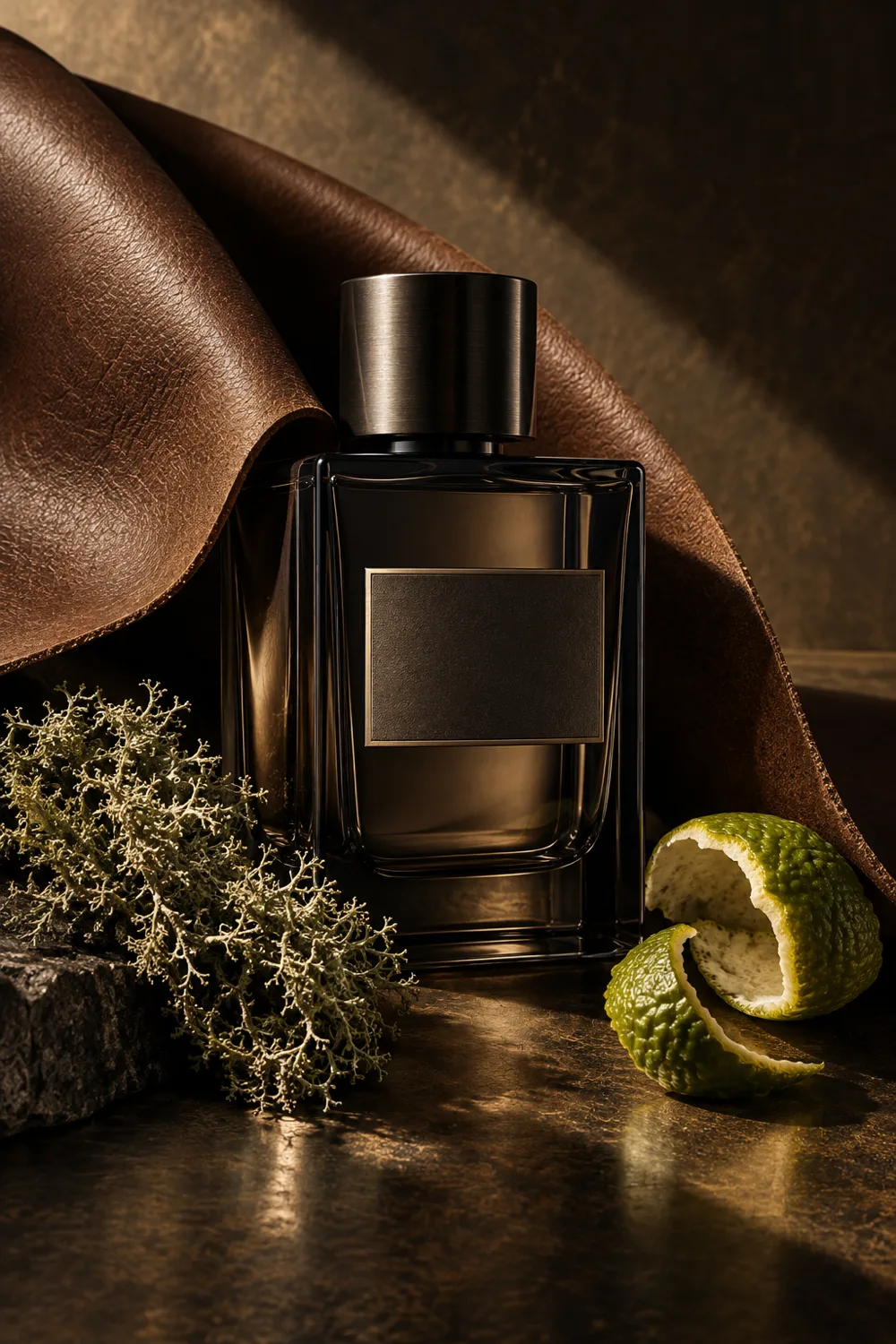
Chypre is French for Cyprus, and the family traces its name to François Coty’s 1917 fragrance simply called Chypre, which established the template the entire category is named after. Per Wikipedia’s summary of classical fragrance composition, chypre fragrances are “built on bergamot, oakmoss, and labdanum” — a citrus top note contrasted against an earthy, mossy, slightly bitter-green base. That contrast is the defining feature: chypre isn’t warm and comforting the way amber or gourmand fragrances are, and it isn’t bright and simple the way a straightforward citrus fragrance is. It’s deliberately tense, pairing something sharp and fresh against something dark and mossy, and that tension is exactly what made it so respected among perfumers for most of the 20th century.
Why chypre nearly vanished
Chypre’s decline traces directly to regulation, not changing taste. Oakmoss, the material most responsible for chypre’s signature mossy-earthy base, has been restricted by fragrance safety authorities over concerns about skin allergies, and modern formulas can only use a small fraction of what classic chypre fragrances once contained. Perfumers have developed substitute materials that approximate oakmoss’s character, but the restriction fundamentally changed what a “chypre” fragrance is allowed to smell like — a genuine chemistry-driven shift, not a matter of the style falling out of fashion on its own.
Combine that with chypre’s inherent complexity — it’s a harder, less immediately pleasing style than a straightforward floral or gourmand, requiring more patience to appreciate — and it’s easy to see why a family that once anchored major fragrance house lineups has receded into a smaller, more specialized corner of the market.
Leather: what it is and where it comes from
Leather fragrances aim to recreate the smell of tanned hide — a warm, slightly smoky, sometimes sweet or tobacco-adjacent impression, since genuine leather itself isn’t used as a raw fragrance material. Per Wikipedia’s summary, leather-family fragrances combine “honey, tobacco, wood and wood tars” to build that impression, sometimes with a touch of birch tar or cade oil for a sharper, more smoky edge. Historically, leather fragrances trace back to a literal industry connection: leather goods and gloves were treated with fragrant materials to mask the smell of the tanning process itself, and over time perfumers began building fragrances that deliberately recreated that scent as a category in its own right, independent of any actual leather product.
A side-by-side comparison
| Family | Key materials | Character | Named for |
|---|---|---|---|
| Chypre | Bergamot, oakmoss, labdanum | Bright citrus against dark, mossy earth — tense and complex | Cyprus, via Coty’s 1917 fragrance |
| Leather | Honey, tobacco, wood, wood tars, birch tar | Warm, smoky, sometimes sweet, animalic in trace amounts | The scent of tanned hide itself |
Both families frequently overlap with woody fragrances at the base — see our guide on woody fragrances explained for the specific materials that often show up underneath both chypre and leather compositions, since dry, mossy, or smoky woods are a natural structural partner for either style.
Where these families sit in the note pyramid
Both chypre and leather are almost entirely heart-and-base-note families, covered in our guide on what top, heart, and base notes mean. Chypre’s citrus top fades relatively fast, leaving the mossy-labdanum tension to define most of the wear; leather’s smoky, tobacco-adjacent character similarly builds slowly and dominates the back half of a fragrance’s life on skin far more than its opening minutes.
Why these are worth trying despite being unfashionable
Chypre and leather being out of mainstream fashion isn’t the same as being bad — if anything, their rarity makes them a genuine point of difference for anyone tired of the same handful of gourmand and fresh-aquatic releases dominating current shelves. A well-made modern chypre or leather fragrance stands out immediately in a room full of more conventional, trend-driven scents, precisely because almost nobody else is wearing one. If you’ve already explored the more common families and want something with real structural complexity to sink into, these two are worth specifically seeking out instead of waiting to stumble across by accident.
Layering considerations
Both families are assertive enough that they work better as an anchor than as an addition — see our full guide on how scent layering works. A leather base pairs well with a light citrus or floral top for contrast, echoing the same bright-against-dark structural logic chypre already uses internally. Stacking two already-complex fragrances (a chypre and a leather together, for instance) risks producing something muddy instead of layered, since both are built to dominate on their own instead of sharing space with an equally assertive partner.
How to test either family fairly
Both chypre and leather reward patience more than most other families, since the initial impression can be misleading in either direction. Chypre’s sharp opening citrus can read as almost forgettable before the mossy base develops fully, and leather’s smoky, sometimes sharp early character can soften and warm up considerably over a few hours as the tobacco and honey elements come forward. A five-second counter test tells you almost nothing useful about either family — plan to wear a sample for a full afternoon or evening before deciding, the same advice covered in more depth in our guide on where and how to apply fragrance. If your only exposure to either family has been a rushed strip test, it’s worth revisiting with a proper skin test before ruling the category out.
Shopping for chypre and leather today
Because neither word shows up often in mainstream marketing, searching by name works better in niche-focused retailers and fragrance community spaces than in mass-market stores — see our guide on what separates niche from designer perfume, since niche houses are considerably more likely than large designer licensors to keep a genuine chypre or leather release in active production. Sampling before buying matters more than usual here too, given how much both families can vary in intensity and how much of an acquired taste either style can be on first exposure.
Fruity chypre and other hybrid revivals
Chypre hasn’t disappeared entirely from mainstream releases — it’s often absorbed into hybrid categories that soften its original tension. “Fruity chypre” fragrances pair the classic bergamot-oakmoss-labdanum skeleton with a sweeter fruit note, producing something more immediately approachable than a traditional dry chypre while keeping a trace of the original structural contrast. These hybrids are one of the more common ways chypre survives in mainstream fragrance today, even when the word itself never appears on the bottle or in the marketing copy. If you want an entry point into chypre without committing to the full classic intensity, a fruity chypre release is a considerably gentler introduction than seeking out a vintage-style formula first.
Leather’s gender history
Leather has historically skewed toward masculine marketing even more strongly than woody or fougère fragrances did, likely tied to leather goods themselves carrying strong masculine-coded associations for much of the 20th century — riding boots, motorcycle jackets, tailored leather accessories. That association has loosened considerably in recent years, with several leather-forward releases now marketed explicitly as unisex or even feminine, pairing the smoky base with a sweeter or more floral top to shift the overall impression. See our guide on gender-neutral fragrance for more on how thoroughly these kinds of associations trace back to marketing decisions, not anything inherent to the notes themselves.
The takeaway
Chypre and leather were once essential, respected fragrance families that have since faded from everyday vocabulary — chypre largely due to regulatory restrictions on oakmoss, leather due to shifting mainstream taste toward simpler, more immediately pleasant styles. Neither disappearance reflects a real decline in quality or interest once you spend real time with a well-made example of either. If your fragrance collection currently leans entirely toward gourmand, fresh, or floral, a single well-chosen chypre or leather fragrance is one of the most effective ways to add genuine structural range — a category most of your collection is probably missing entirely, whether or not you’ve ever noticed the gap.
Why classic chypre is harder to find than it used to be
If you’ve noticed fewer new releases described as chypre in the past couple of decades, that’s not a shift in taste — it’s largely regulatory. Oakmoss, the material most responsible for chypre’s signature dry, mossy base, contains compounds linked to skin allergies, and international fragrance-safety bodies have progressively restricted how much of it a formula can legally contain. Perfumers working in the category today have had to reformulate around lower oakmoss concentrations or find substitute materials that approximate the effect, which is part of why an older chypre and a modern one marketed the same way can smell noticeably different from each other.
Source: Wikipedia, “Perfume” — chypre composition (bergamot, oakmoss, labdanum) and leather composition (honey, tobacco, wood, wood tars).