How many fragrances have you bought a full bottle of, worn twice, and never touched again? For most people who’ve bought more than a couple of perfumes, the honest answer is at least one. Sample subscription services exist specifically to solve that problem — instead of betting $80-200 on an untested full bottle, you pay a small monthly fee for a rotation of samples and figure out what you like before committing real money. The model has grown enough over the past several years that there’s now real variety in how these services work, and picking the wrong one for your goals wastes money almost as effectively as buying the wrong full bottle would.
The three basic models
Curated discovery boxes
You get a set number of samples per month (often 4-6), chosen either by the service based on a preference profile you fill out, or from a themed monthly selection everyone receives. This model is best for people who want to be introduced to things they wouldn’t have picked themselves — the tradeoff is less control over exactly what you receive.
Pick-your-own sample services
You browse a large catalog and choose which specific samples go into your monthly allotment, usually from a points or credit system. This model suits someone who already has a running list of fragrances they want to try, converted from research, recommendations, or wishlist-building, and just needs an affordable way to test them without buying decants individually from multiple sellers.
Full-size rotation/rental services
A smaller category: instead of samples, you receive full or travel-size bottles on a rotating basis and send them back or swap them out, closer to a library model than a sampling model. This suits someone who wants to wear a fragrance properly for weeks at a time before deciding whether to buy a full bottle, instead of judging from a few sample applications.
What you’re paying for
| Model | Typical monthly cost | Best for |
|---|---|---|
| Curated discovery box | $12-20 | Beginners, or anyone who wants to be surprised |
| Pick-your-own samples | $15-25 | People with a specific wishlist to work through |
| Full-size rotation | $25-45+ | People close to a buying decision on a short list |
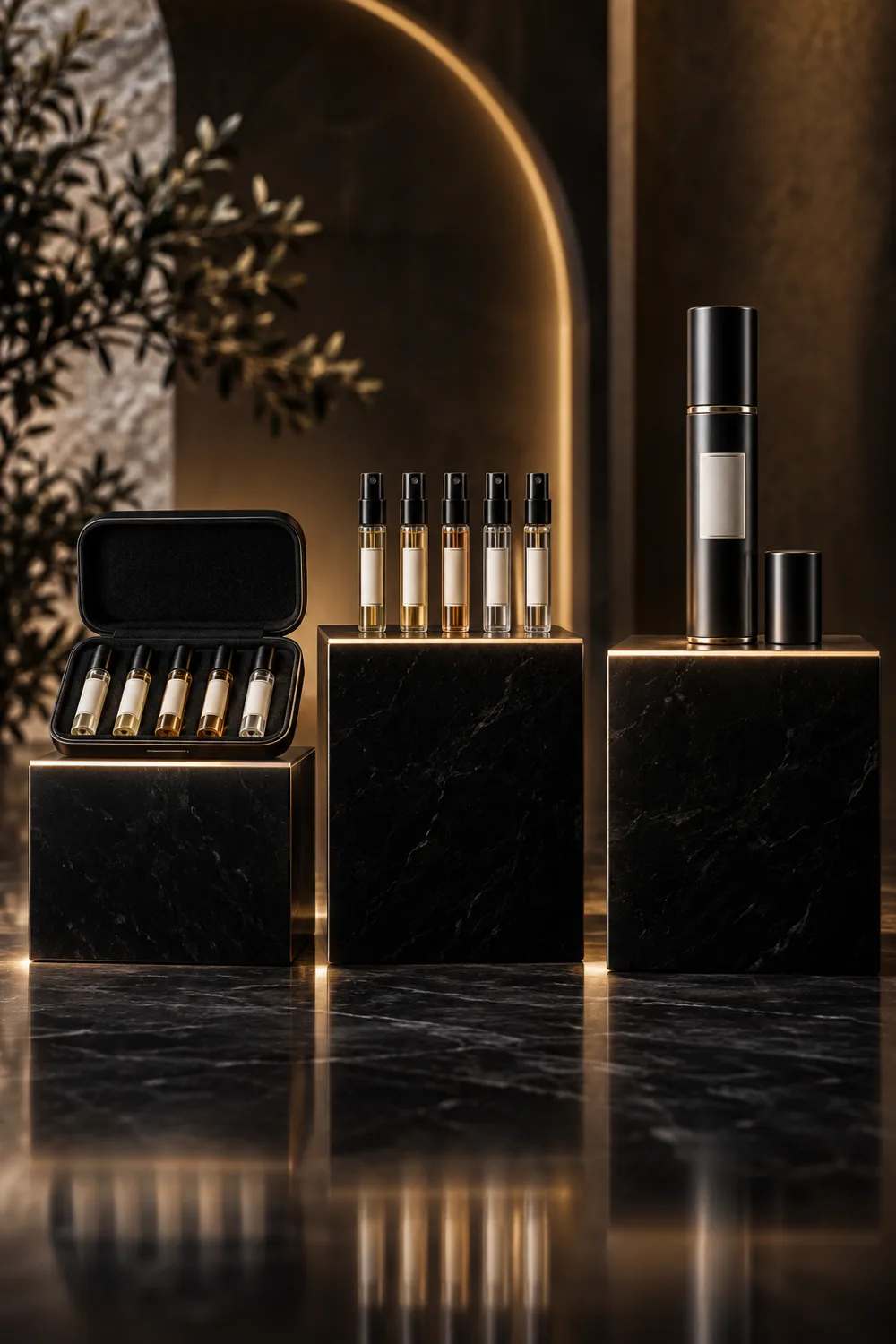
Cost-per-sample math matters more than the sticker price alone: a $15/month box with four 1.5ml samples works out to roughly $2.50 per sample, cheaper than buying most individual decants one at a time from a third-party seller, especially once shipping on individual small orders is factored in.
Who benefits most from a subscription
Subscriptions make the most sense for someone still figuring out their preferences broadly — early in building a collection, unsure which families or specific notes they gravitate toward, and not yet at the point of chasing one or two specific bottles. Once you’ve narrowed down to a short, specific wishlist, a pick-your-own service or simply buying individual decants for those exact fragrances becomes more efficient than paying a recurring fee for a curated box that might not include what you’re after that specific month.
Where subscriptions fall short
A few real limitations worth knowing before signing up. Sample size is usually too small to properly test a fragrance’s full multi-hour development — a 1-1.5ml vial gives you one or two applications, enough to judge the opening and maybe the early heart, but not always enough to fully evaluate the base notes that matter most for a fragrance you’re considering wearing daily. See our guide on what top, heart, and base notes mean for why that distinction matters so much before committing to a full bottle purchase.
Curated boxes also sometimes lean toward whatever brands have paid for placement or partnership deals, which isn’t inherently dishonest but does mean “curated for you” sometimes means “curated for the service’s business relationships” more than pure personal fit. Reading a service’s own explanation of how selections are made, when they publish one, is worth the few minutes it takes.
Subscriptions vs. building your own sample kit
An alternative worth considering seriously: instead of a recurring subscription, buy individual decants of specific fragrances you’ve already researched, directly from third-party decant sellers or from brands offering their own sample programs. This costs more effort upfront (you have to do your own research instead of letting a service curate for you) but gives you complete control over what you’re testing, without paying for months of samples you might not want. This approach pairs well with the research habits covered in our guide on what separates niche from designer perfume, since niche houses in particular are more likely to sell their own official samples directly.
Red flags worth watching for
Not every service in this space operates the same way, and a few patterns are worth treating as warning signs, not just quirks. A service that won’t disclose its sample sourcing (repackaged decants of unclear age and storage history vs. sealed samples direct from brands) is worth extra caution, since fragrance can degrade with poor storage or age, and a stale sample can give you a distorted impression of a fragrance that would smell completely different from a fresh bottle. A service that pushes hard toward converting every sample into a full-bottle purchase, instead of simply providing samples and letting you decide independently, is optimizing for its own sales instead of for helping you make a well-informed choice. And a service with no visible community feedback or reviews after operating for more than a year or two is a reasonable reason to look elsewhere first, even if its marketing looks polished.
Combining subscriptions with in-person testing
A subscription doesn’t have to replace in-person testing entirely — the two work well together. Use a subscription to build a working shortlist of scents worth pursuing further, based on the more relaxed, low-pressure environment of testing at home over a full day, not during a rushed counter visit. Then, for anything that makes your shortlist, seek out an in-person tester at a specialty boutique or department store before committing to a full bottle, since testing straight from the source eliminates any question about sample freshness or storage that a smaller, shipped vial can sometimes introduce. This combined approach costs more time than either method alone, but for an expensive purchase, that extra diligence is often worth it.
Fitting a subscription into a budget
Whichever model you choose, a sample subscription should function as part of your overall fragrance budget, not an addition on top of it — see our guide on building a fragrance wardrobe without overspending for the fuller framework. A common mistake is treating sample spending as “free” because it’s a small monthly charge, while still budgeting a separate full amount for bottle purchases — the sampling spend should reduce how much you’d otherwise waste on untested full-bottle mistakes, not simply add another recurring cost on top of your existing habits.
A practical way to evaluate a service before committing
- Check the cancellation policy first. Month-to-month with no lock-in is the standard and reasonable expectation; be wary of anything requiring a multi-month commitment upfront.
- Look at a recent month’s actual selection, not just marketing copy, if the service publishes past boxes — this tells you more about real variety than any description will.
- Compare the effective cost-per-ml against buying individual decants for a few fragrances you already know you want to try, to confirm the subscription is saving you real money for your specific goals.
- Check whether points or credits expire, for pick-your-own models — an expiring-credit structure can pressure you into using samples on something you’re not interested in, just to avoid losing value.
The takeaway
Sample subscriptions solve a real problem — the gap between reading a description and knowing how a fragrance wears on your own skin — but the right model depends heavily on where you are in building your fragrance knowledge. A beginner benefits most from a curated discovery box; someone with a specific wishlist is usually better served by a pick-your-own model or simply buying individual decants directly. Either way, treat the subscription as part of your fragrance budget, not a free add-on, and it pays for itself many times over the first time it steers you away from a full-bottle mistake. Given how expensive one wrong purchase can be — see our guide on where and how to apply fragrance for how much skin chemistry alone can change a fragrance’s performance from person to person — the modest monthly cost of even the pricier subscription tiers is easy to justify against a single avoided mistake.
One thing worth checking before you sign up
Not every service labeled “curated” delivers on the word. Some build a genuine preference profile from a real intake questionnaire and adjust future boxes based on what you rate afterward; others send the same handful of tiered boxes to everyone at a given price point regardless of stated preferences, with “curated” doing more marketing work than product work. Before committing, look for a service that asks specific questions upfront (concentration preference, families you already avoid, skin type) and lets you rate past samples — that feedback loop is the actual difference between a subscription that gets more useful over time and one that just cycles through inventory.