Name the seven fragrance families and most people can rattle off floral, woody, citrus, and gourmand without hesitation. Ask about fougère and you’ll usually get a blank look, even from someone who owns three or four fragrances built squarely within it. That’s a strange gap for a family this influential — fougère has shaped an enormous share of what “classic men’s cologne” smells like for well over a century, even though almost nobody outside dedicated fragrance circles knows the word, and most fragrance marketing has quietly worked to keep it that way.
What fougère is
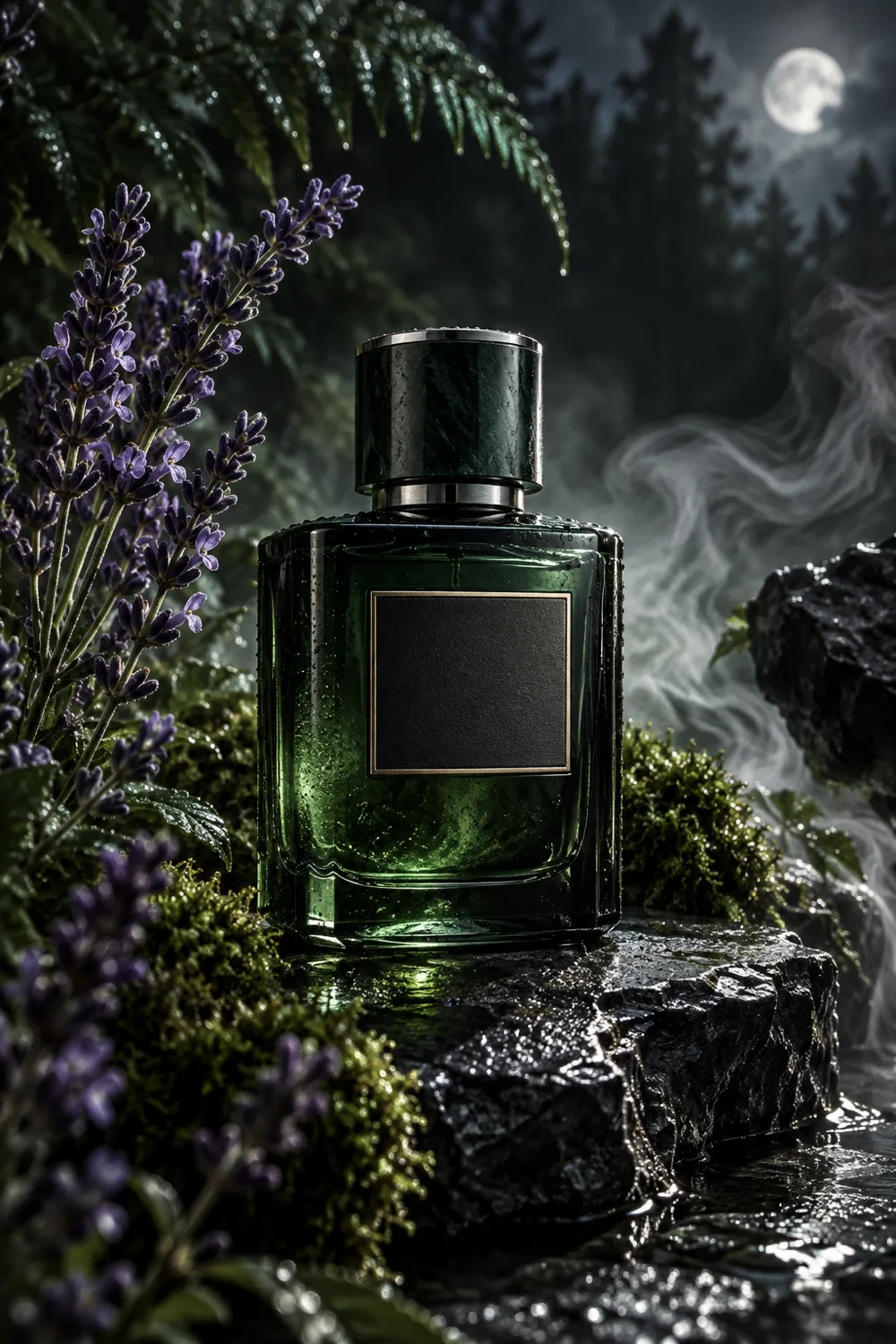
Fougère is French for “fern,” which is a slightly misleading name since ferns themselves don’t have a distinctive smell — the name comes from a specific 1882 Houbigant fragrance called Fougère Royale, which established a scent profile so influential that an entire family got named after it retroactively. According to Wikipedia’s summary of classical fragrance composition, fougère fragrances are “constructed from lavender, coumarin and oakmoss,” producing something herbaceous and woody with a distinct sweet-hay undertone from the coumarin. That three-part structure — aromatic lavender on top, sweet coumarin in the middle, mossy-woody oakmoss at the base — is the skeleton nearly every fougère fragrance is still built around today, more than a century after the family was named.
The aromatic connection
Aromatic and fougère overlap heavily enough that they’re often discussed together, though they’re not identical. “Aromatic” refers more broadly to fragrances built around herbal notes — lavender, rosemary, sage, thyme — without necessarily including the full fougère structure of coumarin and oakmoss underneath. Every fougère is aromatic, in the sense that lavender or another herb typically anchors the top, but not every aromatic fragrance is a fougère — a fragrance can lean heavily on rosemary or sage without ever developing the sweet-mossy base that defines true fougère. Michael Edwards’s widely used fragrance wheel repositioned Aromatic notes in a 2010 revision specifically to sit between Dry Woods and Citrus, reflecting how central the herbal-woody bridge has become to modern classification.
Why fougère became “the men’s cologne smell”
From the late 19th century through most of the 20th, fougère became the default template for fragrances marketed to men — barbershop-adjacent, clean, herbaceous, with just enough sweetness from the coumarin to keep it from reading as purely sharp or medicinal. Generations of classic drugstore and department-store men’s colognes drew from this same lavender-coumarin-oakmoss structure, which is a big part of why the smell reads as instantly, almost stereotypically “masculine” to most people even without knowing the technical name for it. That association is entirely a marketing and cultural artifact, not a property of the ingredients themselves — see our guide on gender-neutral fragrance for the fuller history of how fragrance families got sorted by gender in the first place.
Modern fougère vs. classic fougère
| Style | Character | Typical era/context |
|---|---|---|
| Classic barbershop fougère | Sharp lavender, prominent oakmoss, soapy-clean | Mid-20th-century drugstore colognes |
| Modern “fresh” fougère | Softer lavender, less oakmoss (regulatory limits reduced its use), more citrus | Contemporary mass-market and niche releases |
| Aromatic fougère | Heavier on rosemary/sage/thyme, less sweet | Both classic and modern, more herbal-forward |
| Sweet/gourmand fougère | Fougère structure with added vanilla or tonka | Recent hybrid releases blending fougère with gourmand trends |
Worth noting: oakmoss has been restricted by fragrance industry safety regulations over the past few decades due to allergy concerns, so many modern fougères use reformulated or substitute mossy-woody materials instead of the traditional oakmoss extract — a big part of why some classic fougères and their modern reformulations smell noticeably different from each other even under the same name.
How fougère sits in the note pyramid
Fougère’s structure maps unusually cleanly onto the top/heart/base system covered in our guide on what top, heart, and base notes mean — lavender typically opens as a top note, coumarin develops through the heart, and oakmoss (or its modern substitutes) anchors the base. This clean structural logic is part of why fougère has remained such a stable, enduring template: each layer has a clearly defined job, without the more complex overlapping accords found in some other families.
Wearing fougère well
Fougère’s clean, barbershop-adjacent character makes it one of the safer, more universally accepted choices for professional and everyday wear — see our guide on work-appropriate fragrance for more on why understated, low-sweetness fragrances test well in shared spaces. It also holds up reasonably well across seasons, leaning slightly toward cooler-weather wear thanks to the coumarin warmth but never becoming as heavy or cloying as a full gourmand or amber composition — see our fall and winter rotation guide for how it fits alongside heavier seasonal picks.
Layering with a fougère base
Fougère’s structured, three-part build makes it a strong anchor for a layering routine — see our full guide on how scent layering works. Because it already balances aromatic, sweet, and mossy-woody elements internally, adding a single complementary layer (a citrus boost, a spice note, or a light woody addition) tends to work more predictably than layering on top of a less-structured single-note fragrance, where the risk of clashing instead of complementing is higher.
Building a fougère into a small collection
A well-chosen fougère earns its place in almost any collection specifically because of how versatile it is — see our guide on building a fragrance wardrobe without overspending for the broader framework, but fougère fits neatly into the “daily-wear, works in almost any context” role that guide recommends prioritizing first. It’s understated enough for an office, structured enough to feel put-together for a more formal occasion, and warm enough (thanks to the coumarin) to hold up reasonably well into cooler months without needing to be swapped out entirely for something heavier. If you’re starting a collection from scratch and want one fragrance that covers the widest range of situations with the least risk of feeling out of place, a well-balanced modern fougère is a strong, if unglamorous, first pick.
Why the name never caught on with consumers
Part of why “fougère” stayed a niche vocabulary word despite the style’s massive commercial influence comes down to marketing: brands almost never label a fragrance “fougère” on the bottle or in advertising, instead using softer, more evocative language like “fresh,” “classic,” or “aromatic” that doesn’t require explaining an unfamiliar French word to a general audience. The category shaped the market enormously while staying almost entirely behind the scenes, terminology-wise — most people who own and love a fougère-structured fragrance have simply never had a reason to learn the word.
Sniffing out a fougère when the label won’t tell you
Since brands rarely use the word, spotting a fougère means reading between the lines of a product description. A few tells: any mention of lavender paired with “woody” or “mossy” in the same breath; the word “classic” or “traditional” attached to a men’s fragrance; a description that name-checks “barbershop” directly; or a note list that includes both lavender and oakmoss (or a modern oakmoss substitute like Evernyl or treemoss) alongside a warm, slightly hay-like base note. None of these alone is definitive, but two or three together are a strong signal you’re looking at a fougère-structured fragrance regardless of what the marketing copy calls it.
Fougère’s influence on other families
Fougère’s lavender-coumarin-oakmoss skeleton didn’t stay contained within its own category — elements of it show up as supporting structure across other families entirely. A woody fragrance with a touch of lavender up top is borrowing a fougère-adjacent opening even if the rest of the composition has nothing to do with the classic template. A modern aromatic-gourmand hybrid might use coumarin’s sweet-hay quality as a bridge between an herbal top and a dessert-like base, again drawing on fougère’s structural logic without being a fougère itself. Recognizing these borrowed elements is part of why understanding fougère specifically makes it easier to parse fragrances across several other families too, not just ones explicitly built in the classic mold.
The takeaway
Fougère is one of the most commercially influential fragrance families in history and one of the least recognized by name — a lavender-coumarin-oakmoss structure that quietly defined generations of classic men’s cologne while staying almost invisible in consumer-facing marketing. If you already own and like a “classic” or “barbershop-style” cologne, there’s a strong chance you already own a fougère without knowing the term for it. Learning to recognize the structure gives you a much faster way to find similar fragrances than searching by vague descriptors like “fresh” or “clean” alone — a small piece of vocabulary that, once learned, is hard to unsee across a huge share of the fragrance shelf.
A name that doesn’t describe a smell
“Fougère” is French for fern, and it’s worth knowing the name is decorative rather than descriptive — ferns are nearly scentless, so nothing about the fougère accord is trying to recreate a real plant smell. The name comes from a specific 19th-century release, Houbigant’s Fougère Royale, that established the lavender-coumarin-oakmoss combination as its own category; later perfumes built on the same structure inherited the name as a category label, not because anyone was chasing the scent of real ferns. It’s a useful reminder that a lot of fragrance-family naming is historical accident rather than literal description, which is worth keeping in mind any time a family name seems to promise something specific.
Source: Wikipedia, “Perfume” — fougère composition (lavender, coumarin, oakmoss); Wikipedia, “Fragrance wheel” — Michael Edwards’s 2010 Aromatic subfamily repositioning.