Why fragrance sits in a strange gifting category
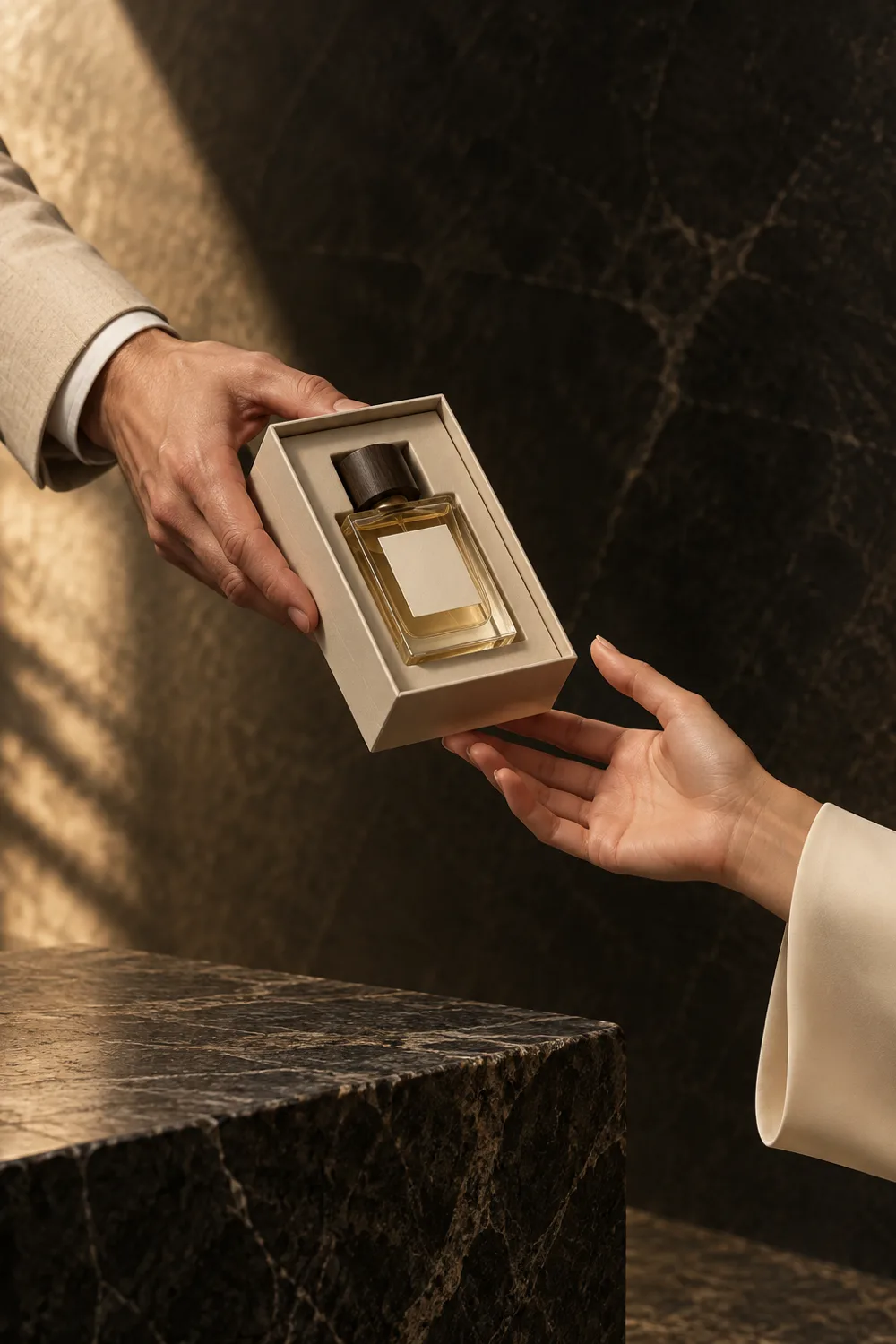
Fragrance is personal in a way most gifts aren’t. It gets worn on skin, chosen based on individual chemistry and taste, and can read as commentary on how the giver perceives the recipient — a coworker gifting perfume can accidentally imply something about how they think that person smells, even when no such implication was intended. That combination of intimacy and potential for misreading is exactly why fragrance gifting etiquette matters more than it does for a book or a candle, and why getting the relationship-to-gift match right carries more weight here than in most other categories.
Relationships where fragrance is a safe, welcome gift
- Romantic partners — one of the clearest appropriate contexts, especially once you know their taste well enough to choose thoughtfully.
- Immediate family — parents, siblings, adult children, particularly around a milestone birthday or holiday where a more personal gift fits the occasion.
- Close friends who’ve expressed interest in fragrance or whose taste you know well through years of shared context.
- Someone who’s explicitly told you they want fragrance — direct requests remove almost all the etiquette risk, regardless of relationship closeness.
Relationships where it’s riskier, and why
Workplace gift exchanges are the most common source of fragrance-gifting missteps. A coworker or boss receiving perfume from a colleague can read it as overly personal, especially across a power imbalance (a gift from a subordinate to a manager, or vice versa) or across genders in a professional context where the intent could be misread. This isn’t a universal rule — some workplaces have a casual, easygoing gift-exchange culture where fragrance is fine — but it’s worth reading the specific environment instead of assuming what worked at a previous job applies everywhere.
New relationships carry similar risk from a different angle: a fragrance gift early in a relationship, before you know someone’s taste, can feel presumptuous — you’re making a fairly intimate choice about how they’ll smell based on very little information. A gift card to a fragrance retailer, or a discovery/sample set framed as “something to explore together” instead of a single committed bottle, sidesteps this without ruling out fragrance as a category entirely.
A short reference table
| Relationship | Full-bottle gift | Better alternative if unsure |
|---|---|---|
| Romantic partner, established | Appropriate | — |
| Parent or sibling | Appropriate | — |
| Close friend who loves fragrance | Appropriate | — |
| Coworker, casual office culture | Situational | A shared discovery set, or skip fragrance entirely |
| Boss or direct report | Generally avoid | A non-personal gift category instead |
| New romantic interest | Risky, presumptuous | A gift card or a “let’s explore together” sample set |
| Acquaintance / distant relative | Situational | A broadly safe, well-reviewed unisex option, or a different gift category |
Cultural and personal variation is real — read the specific person
Some of what reads as “too personal” in one cultural or family context is completely normal in another — fragrance gifting norms vary meaningfully across cultures and even across individual families within the same broader culture. If you’re gifting across a cultural context you’re not deeply familiar with, it’s worth a light gut-check (with a mutual friend, or the recipient’s own past gift-giving patterns) instead of assuming your own frame of reference applies universally. This same logic runs both directions: don’t assume fragrance is universally too intimate to gift casually, and don’t assume it’s universally fine either — both assumptions skip past the specific relationship and context in front of you.
Reading whether someone wants a fragrance gift at all
A few practical signals worth checking before committing to fragrance as a gift category at all: does the person already wear fragrance regularly, or have they mentioned wanting to start? Have they complimented specific scents on other people, or brought up fragrance in casual conversation? Do they have any known sensitivities — migraines triggered by strong scent, a workplace with a fragrance-free policy — that would make a fragrance gift unwelcome regardless of how well-chosen it is? Skipping this check and defaulting to fragrance because it “seems like a nice, personal gift” is how well-intentioned gifts go unused on a shelf.
When in doubt, indirect works better than a bold guess
If you’re unsure whether fragrance is the right category for a specific relationship, the safer move is rarely a full, committed bottle chosen entirely on your own judgment. A gift card to a fragrance retailer, a modest discovery/sample set, or a fragrance-adjacent gift (a nice travel atomizer, a fragrance-related book) all signal the same interest and thoughtfulness with a much smaller risk of a genuine miss — see our guide on choosing fragrance as a gift for the practical side of narrowing down a specific bottle once you’ve decided the category itself is a fit.
Milestone occasions change the calculus
A wedding, a graduation, a significant birthday, or a major career change all carry more social license for a meaningful, personal gift than an ordinary Tuesday would — this is part of why fragrance shows up so often around these occasions specifically. If you’re on the fence about whether fragrance fits a relationship, a genuine milestone tips the scale toward yes more than a routine gift-exchange occasion would, since the occasion itself signals that a more personal gift is expected and welcome.
Scent-free environments deserve a direct check
Some workplaces, households, and individuals maintain fragrance-free policies for real reasons — migraines, asthma, chemical sensitivities, or simply a personal preference for an unscented environment. Gifting fragrance into one of these situations isn’t a minor misstep; it can create a real, unwelcome obligation for the recipient to either use something that causes them discomfort or discard a gift they feel bad not using. If there’s any chance the recipient falls into this category and you’re not certain, ask directly or choose a different gift entirely instead of assuming the concern doesn’t apply to them.
What to do if you receive a fragrance gift you won’t wear
Etiquette runs both directions. If you receive a fragrance gift that isn’t right for you, a graceful thank-you focused on the thoughtfulness of the gesture is the correct response in the moment, regardless of whether you’ll end up wearing it. Whether and how you mention it later depends entirely on the relationship — a partner or close family member you see regularly is worth a gentle, honest conversation eventually, since it helps them choose better next time; a distant relative or one-time workplace gift exchange usually isn’t worth revisiting at all. Re-gifting or setting a fragrance aside unused is completely normal and doesn’t require an explanation to anyone.
Regifting and secondhand fragrance as gifts
Passing along an unopened or barely-used fragrance you received but won’t wear is a reasonable, low-stakes way to avoid waste, as long as you’re honest with yourself about whether it’s fully unused and in good condition — fragrance can degrade with heat, light, and time, so a bottle that’s sat opened on a windowsill for two years isn’t a great regift candidate even if it’s technically unopened. Buying a fragrance secondhand specifically to give as a gift is a different, riskier proposition: authenticity and storage history are harder to verify from a private seller than from an authorized retailer, and gifting a fragrance whose provenance you can’t vouch for carries real risk if it turns out to be counterfeit or degraded. If cost is the reason you’re considering a secondhand purchase, a smaller bottle or a curated sample set from an authorized source is usually the safer way to stay within budget without that risk.
Quick answers
Is it ever inappropriate to gift fragrance to a child or teenager? Not inherently, but skew toward lighter, simpler, age-appropriate scents and consider that younger recipients’ preferences change quickly — a smaller or less expensive bottle is a more sensible choice than a significant investment in something they may outgrow within a year.
Is a group gift of fragrance for a shared occasion (a wedding, a big birthday) different from an individual gift? Yes — a group gift spreads both the cost and the “personal choice” risk across multiple contributors, which makes a somewhat bolder pick more acceptable than the same choice made unilaterally by one person.
Should you ever ask directly whether someone wants fragrance as a gift? Yes, and it’s usually the most reliable option — a direct, low-key question removes almost all the etiquette uncertainty covered above, at the small cost of a bit of the surprise.
The takeaway
Fragrance gifting etiquette isn’t a fixed rulebook so much as a matter of reading the specific relationship, the specific person, and the specific context correctly. The categories above are starting guidance, not universal law — a particularly close coworker relationship might make an office fragrance gift completely fine, and a distant family member might be someone you know well enough that a bold, specific choice lands perfectly. When the relationship or context is unclear, err toward the safer, more indirect options — a gift card, a sample set, a direct question — instead of betting a full bottle on a guess.