You’re standing in front of a fragrance counter, or scrolling a gift guide at 11pm, trying to pick a perfume or cologne for someone else. You don’t know their exact taste. You definitely don’t know their skin chemistry. Every bottle looks confident and every description uses the same five adjectives. This is one of the hardest gift categories to shop for well — and most of the advice out there (“just get something popular!”) is exactly how you end up with a bottle that sits unused in a drawer.
Fragrance gifting goes wrong less often because of bad taste and more often because of skipped information-gathering. You don’t need to become a fragrance expert to buy well here. You need to ask a few better questions before you start browsing.
What to find out before you shop (without asking directly)
Directly asking “what fragrance do you want” can work, but it removes the surprise and isn’t always possible. A few lower-key ways to gather what you need:
- Check what they already own. A bathroom shelf or vanity tells you more than any conversation — is there one bottle they clearly reach for, or several in the same general style?
- Notice what they compliment on other people. “That smells so good” reactions are a genuine signal of personal preference, even when it’s not about their own scent.
- Ask an adjacent question. “Do you like stronger, bolder scents or something lighter and cleaner?” gets useful information without requiring them to name a specific bottle.
- Consider the occasion and how they live. Someone in a scent-sensitive office needs something different from someone who wants a statement scent for evenings out.
The safest categories when you’re not sure
If you have no information to go on at all, some categories fail less often than others, because they’re broadly likable instead of polarizing:
| Category | Why it’s a safer default |
|---|---|
| Clean, soft musks | Broadly liked, rarely offensive, easy to wear in most settings |
| Light citrus or citrus-aromatic | Familiar, fresh, low risk of reading as “too much” |
| Classic warm vanilla-based scents | Comforting and widely appealing across a broad range of tastes |
What to generally avoid as a blind gift: anything very niche or conceptual (the whole point of those scents is often to be polarizing), and anything extremely trend-specific that might feel dated in a year. Save the adventurous pick for someone whose taste you already know well.
Translating fragrance descriptions into something useful
Product descriptions lean on a small set of recycled adjectives — “fresh,” “sophisticated,” “warm,” “mysterious” — that describe a feeling more than a scent, which makes them nearly useless for comparing options. A few translations that hold up better:
- “Fresh” or “aquatic” usually means citrus, marine, or green notes up front — closer to clean laundry or cut grass than to a specific fruit.
- “Warm” or “oriental” (a dated but still common label) usually signals amber, vanilla, spice, or resin-heavy compositions — cozier and heavier, better suited to cooler months.
- “Woody” spans a huge range on its own — a dry cedar is a very different experience from a creamy sandalwood or a smoky vetiver, so treat “woody” as a starting category, not a specific answer.
- “Gourmand” means unmistakably food-adjacent — vanilla, caramel, praline, cocoa — and tends to be either loved or found overwhelming, with little middle ground.
If a listing gives actual named notes (bergamot, iris, oud, tonka bean) instead of just mood words, that’s more useful information than the marketing copy around it — it tells you what’s in the formula instead of how the brand wants you to feel about it.
Shopping by relationship, briefly
The “safe category” advice above holds broadly, but a few relationship-specific notes are worth keeping in mind. For a partner, you likely have enough information to go more specific and personal — lean into it instead of defaulting to the safest option out of caution. For a parent or older relative, checking whether they already wear something (and asking a sibling or other family member if you’re unsure) usually beats guessing, since fragrance preference tends to be more settled later in life. For a coworker or acquaintance gift exchange, stay firmly in the safe-category lane — this is exactly the low-information, low-personal-context situation those categories exist for. For a friend whose taste you know socially but haven’t discussed specifically, the “what do they compliment on others” signal tends to be the most reliable one available.
Sets and samples solve the guessing problem entirely
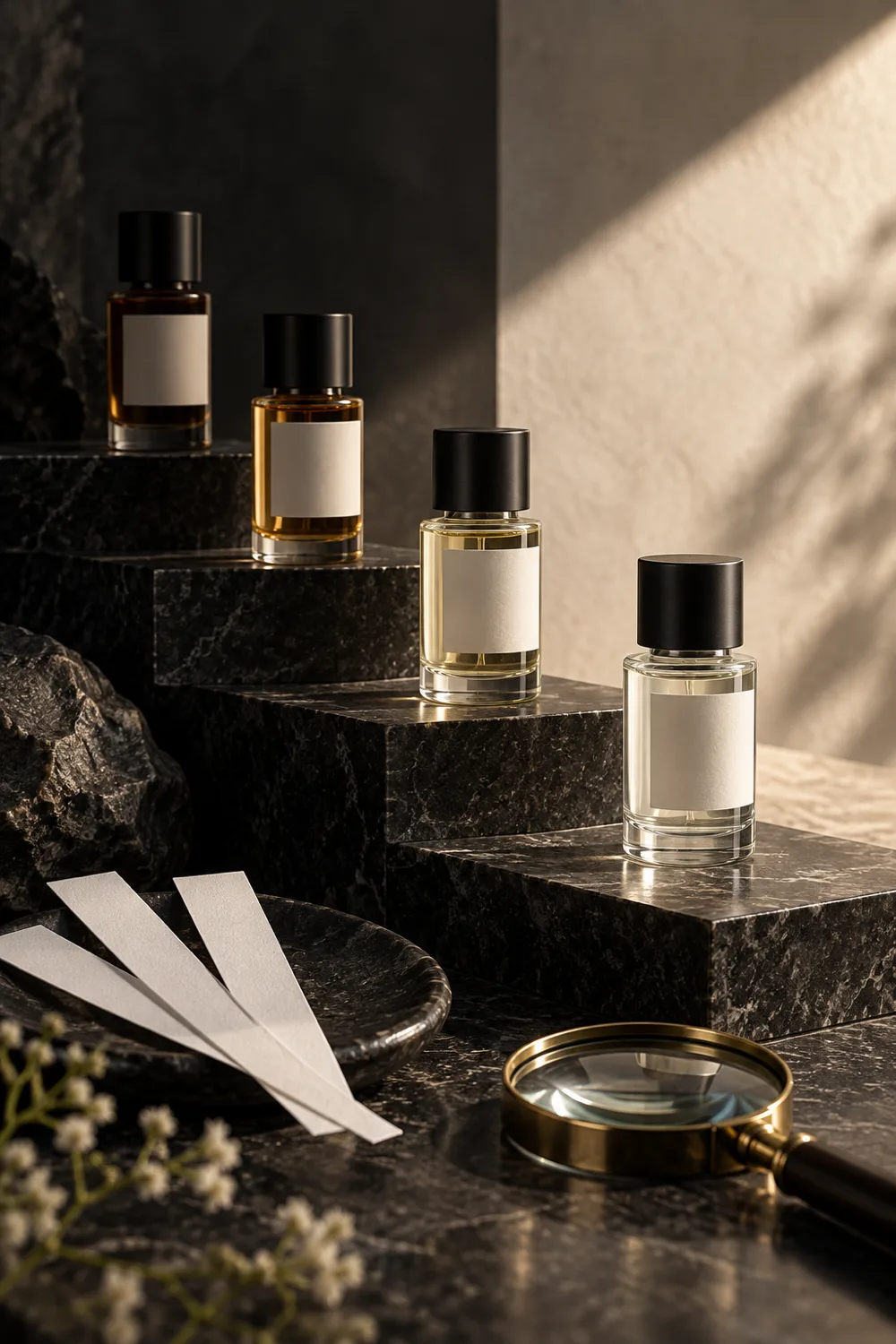
If you can’t narrow it down at all, a discovery or sampler set sidesteps the whole problem — instead of betting on one bottle, you’re giving several smaller options and letting the recipient choose their favorite. This works especially well for someone just starting to build interest in fragrance, since it doubles as an introduction to different families instead of a single verdict. If they end up liking more than one, that’s the start of a layering routine, not a wasted gift.
A gift receipt or clear return/exchange policy is worth prioritizing over trying to guess perfectly — fragrance is personal enough that even a well-researched guess sometimes misses, and a graceful exchange option matters more than most gift-givers think to check.
Mistakes that sink an otherwise good gift
- Buying what you like instead of what they’d like. Easy trap, especially for a partner — your own preference isn’t a proxy for theirs.
- Ignoring an existing signature scent. If someone has worn the same fragrance for years, that’s a strong signal, not something to override with a “fresh idea.”
- Going too niche for a first fragrance gift. Save the unusual, conversation-starting bottle for someone who already has an established collection and appetite for something different — see our breakdown of what separates niche from designer fragrance if you’re unsure which category a specific gift falls into.
- Overspending to compensate for uncertainty. A thoughtful sample set beats an expensive guess — see our guide to building a fragrance wardrobe without overspending for how price and value relate in this category.
- Forgetting the occasion changes the calculus. A birthday gift can be more personal and specific; a coworker “Secret Santa” gift should stay firmly in safe-category territory.
- Trusting a top-seller list as a personalization shortcut. Best-seller status tells you a scent is broadly inoffensive, not that it fits this specific person — treat it as a safe-category filter, not a recommendation engine.
Gifting for someone whose taste you don’t share
One of the harder cases: buying for someone whose general aesthetic is very different from your own — a much younger or older recipient, or someone whose cultural or regional fragrance norms differ from what you’re used to. In these cases, leaning on the broadly-safe categories above and letting the recipient’s own stated preferences (even vague ones, like “I like stuff that smells expensive” or “I only wear something light”) guide the shortlist works better than guessing based on your own taste as a stand-in.
A worked example
Back to that counter, or that late-night gift guide tab. Say you’re buying for a sibling and all you know for certain is that they “like stuff that smells clean” and wear mostly neutral, low-key clothing. That’s more to work with than it feels like: it rules out heavy gourmand and maximalist niche options, points toward the clean-musk or light-citrus categories above, and suggests going safer on strength (an EDT instead of a heavily concentrated parfum, so it stays “clean” instead of becoming a statement scent). If you still can’t narrow it to one bottle, a small discovery set from a well-reviewed clean-musk line solves the problem completely — you’ve applied everything you know without betting the whole gift on a single guess.
A short pre-purchase checklist
- Do you know roughly which broad family they gravitate toward (fresh, warm, floral, woody)?
- Do you know if they have any sensitivities or a strongly scent-averse environment (workplace, shared living space)?
- Is this a first fragrance gift for them, or do they already have an established collection?
- Does the retailer offer an easy exchange if it’s not right?
- If you’re still unsure after all of this — would a sample/discovery set serve better than a single full bottle?
If most of your answers are “I don’t know,” that’s not a reason to guess bigger — it’s a signal to go with the safer, more broadly-liked option, or the sample set, over betting on a single expensive bottle.
One more thing: presentation isn’t the hard part
It’s worth saying plainly: the packaging, the ribbon, the gift box — none of that is where fragrance gifts go wrong. The failure point is almost always upstream, in skipping the few minutes of information-gathering above and defaulting to whatever’s prominently displayed at the counter or top of a “best sellers” list. Spend the effort where it matters and the presentation takes care of itself.
Quick answers
Is it better to ask directly what fragrance someone wants? If the relationship allows for it, yes — it removes almost all the guesswork. Save the indirect, detective-work approach above for cases where a direct question would ruin a surprise or feel awkward to ask.
Is a bigger bottle always a better gift? No. A large bottle of the wrong scent is a bigger miss than a small one, and a generous size only helps once you’re confident in the pick. When in doubt, a smaller size or a sampler set is the safer, more thoughtful choice.
What if the recipient already owns a lot of fragrance? Ask what’s missing from their shelf instead of what they’d like in general — a seasonal gap (nothing built for summer, say) or a category they haven’t tried is easier to shop for than an open-ended preference.