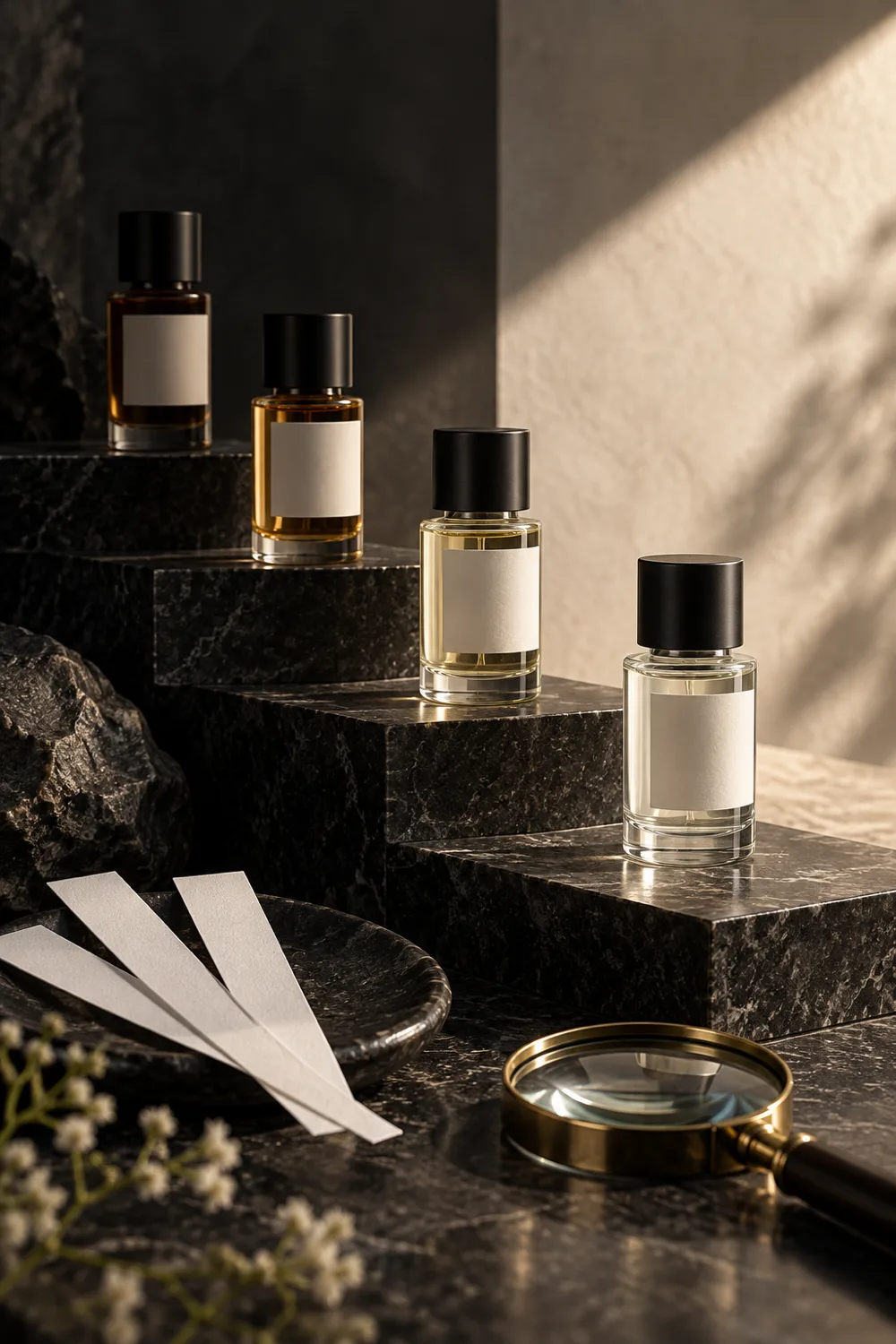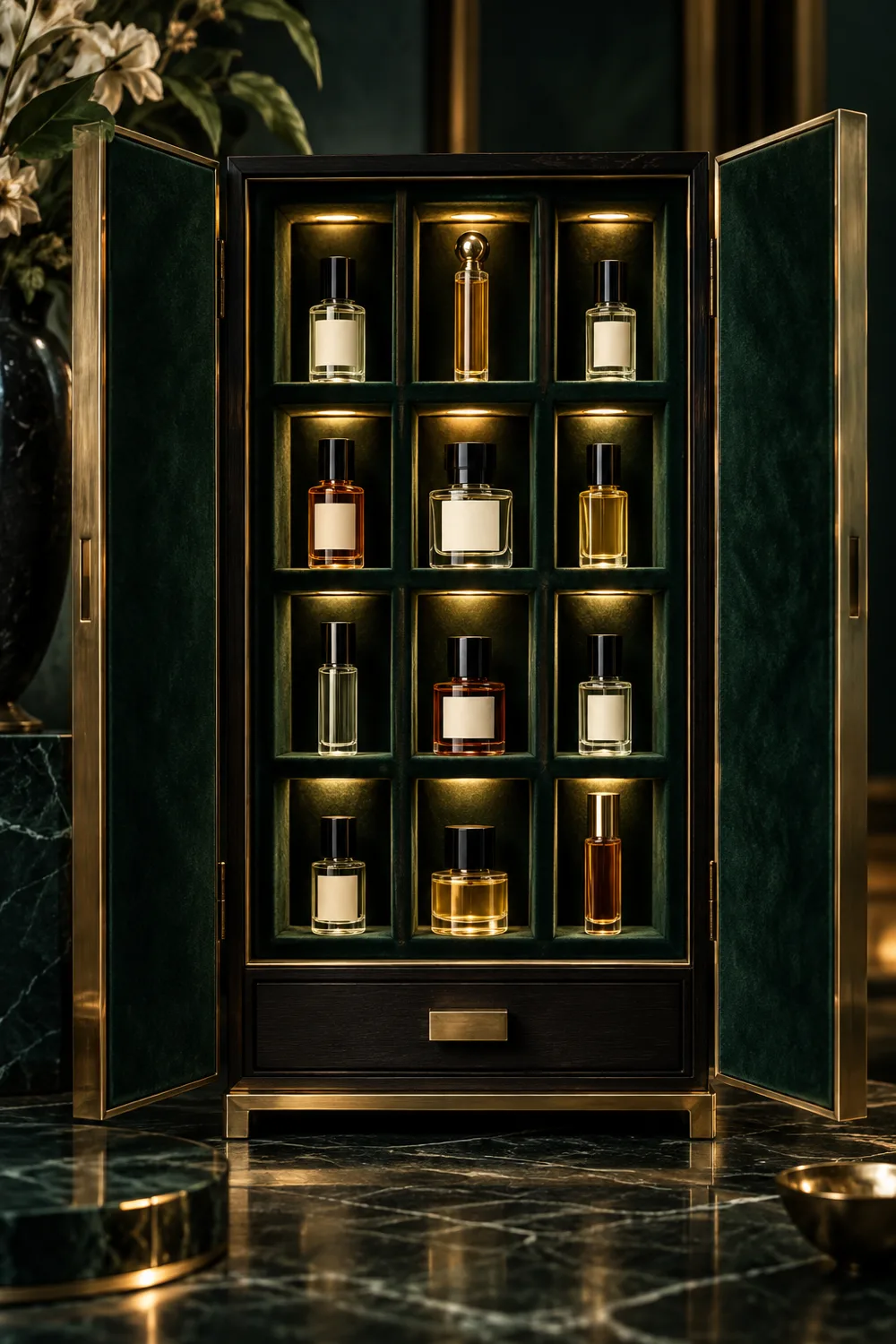
Every fall, fragrance advent calendars start showing up in gift guides and beauty retailer emails: 12 or 24 small vials behind numbered doors, a different scent to open each day leading up to a holiday. They sit at an odd price point — often $100 to $200 — that’s too much for an impulse buy and too little to feel like a serious investment. Whether one is worth it depends entirely on what you’re buying it for, which isn’t always the thing the marketing implies.
What you’re paying for
An advent calendar or discovery box is, structurally, a sample set with a calendar gimmick attached. The value proposition is exposure to a range of scents — sometimes from one house’s catalog, sometimes curated across many brands — in small enough quantities that trying something you end up disliking costs you one day’s disappointment instead of a full bottle’s worth of regret. The calendar format itself adds nothing to that value; it’s presentation, not substance. Judge these products the way you’d judge any sample set: by what’s inside, not by the box.
When a calendar or discovery box is a good deal
- The per-vial math works out favorably compared to buying the same samples individually — check whether the total value listed is realistic (some brands inflate “full retail value” claims) instead of taking the marketing number at face value.
- It includes scents from houses you wouldn’t otherwise sample, especially pricier niche or independent lines where a $15-20 individual sample would otherwise be the only way in.
- You’re new to fragrance and want structured exposure across families without researching and ordering two dozen individual samples yourself.
- The seller is reputable and the vials are correctly labeled, properly stored, and not decanted from questionable sources — this matters more with fragrance than with most other product categories, since a mislabeled or poorly stored sample can misrepresent how a scent performs.
When it’s a worse deal than it looks
The math flips when a calendar is padded with filler: scents from a single house’s lower-tier or discontinued lines included mostly to hit a door count, vial sizes too small to get a fair read on how a scent develops past the first twenty minutes, or a “curated” box that’s little more than whatever a retailer had leftover inventory of. A calendar built around one brand’s full catalog, sold by that brand directly, is often closer to a marketing tool than a carefully curated discovery product — that’s not automatically bad, but it means you’re sampling one house’s range, not a considered cross-section of the category.
Watch specifically for vial sizes under half a milliliter. That’s barely enough for one wearing, not enough to judge how a scent evolves over several hours, which matters more for niche and extrait-concentration fragrances that are built to develop slowly.
A short cost comparison
| Approach | Typical cost | What you get |
|---|---|---|
| 24-door advent calendar | $100-200 | 24 small vials, mixed quality/relevance, fixed selection |
| Individually chosen decants | $3-15 per scent | Full control over selection, can prioritize what interests you most |
| Brand-direct discovery sets | $15-40 for 4-6 scents | Guaranteed authentic, correctly stored, narrower but more curated range |
If you already know roughly which families or houses interest you, individually chosen decants usually beat a calendar on relevance per dollar. If you don’t know where to start at all, a well-reviewed calendar’s built-in structure can be worth the premium over researching and ordering everything yourself.
How to evaluate a specific calendar before buying
- Look up the exact scent list if the retailer publishes it in advance, not just the brand names — a list you can research beats a surprise-only format if you’re trying to make a value judgment.
- Check vial sizes specifically, not just the door count — more doors with smaller vials isn’t automatically better than fewer doors with usable sample sizes.
- Read reviews from a previous year’s version of the same calendar if the retailer runs it annually — quality and curation can be surprisingly consistent or inconsistent year to year for the same product.
- Compare the listed “full retail value” against real per-milliliter sample pricing you can find elsewhere for the same scents, instead of trusting the marketed value figure directly.
What to do with the samples afterward
The real value of a discovery box shows up after you’ve worn each sample, not while you’re opening the doors. Keep simple notes — a scent’s name, the date you tried it, and a one-line reaction — because 24 small vials tried over a few weeks blur together fast without some record. If something stands out, that’s the moment to think about a full bottle, ideally using the framework in our guide on building a fragrance wardrobe without overspending instead of buying on excitement alone. If several stand out from the same family, that’s useful signal about your own preferences worth carrying into future sampling, independent of whether any single scent from the box becomes a full-bottle purchase.
Discovery boxes as an ongoing habit, not a one-time gift
Outside the seasonal advent format, several services run monthly or quarterly discovery boxes on a subscription basis. These solve a slightly different problem than a one-time calendar: instead of a single burst of 24 scents, you get a smaller, steady trickle over time, which is often easier to wear-test properly since you’re not racing through a full box before samples degrade. If ongoing discovery matters more to you than a single seasonal event, a subscription model may serve the underlying goal better than a once-a-year calendar purchase, even though the calendar format gets more marketing attention around the holidays specifically.
Storage and shelf life matter more than people expect
A discovery box or calendar sitting sealed for weeks before you open the first door isn’t losing much, but once vials are opened, small samples are more exposed to air, light, and temperature swings than a full bottle with a proper cap and atomizer. Heat and direct sunlight degrade fragrance faster than most people assume, and a small vial has a higher surface-area-to-volume ratio than a full bottle, so it’s more exposed relative to its size. Keep opened samples somewhere cool and dark between wears — a drawer, not a sunny windowsill or a car — and try to work through a calendar within a reasonable window instead of stretching it across many months, since the later doors won’t necessarily be in the same condition as the early ones if storage has been inconsistent.
A note on gifting one to someone else
Buying a discovery box or calendar as a gift changes the calculus slightly from buying one for yourself. The structured, one-a-day format works well as a gift specifically because it turns fragrance exploration into a small daily ritual instead of a single overwhelming choice — useful for someone who’s expressed general interest in fragrance but hasn’t built a clear sense of what they like yet. For that recipient, a broadly curated box across multiple houses and families tends to be a better gift than a single-brand calendar, since the goal is exposure and preference discovery, not showcasing one house’s catalog.
Quick answers
Do advent calendars ever contain full-size bottles? Rarely, and when they do it’s usually one “hero” full-size product paired with many small samples — check the listing carefully instead of assuming based on the total door count.
Is it worth buying a calendar just for the gifting appeal? As a gift for someone building fragrance knowledge, yes, with the same caveats above about vial size and curation quality — see our guide on choosing fragrance as a gift for more on this.
Can you tell how a fragrance will wear long-term from a calendar sample? Only partially — a single small vial gives you an opening impression and maybe a few hours of development, not the multi-wear pattern that reveals how a scent settles into your personal chemistry over time.
Beauty-retailer calendars versus niche-focused ones
Large beauty retailers and niche-focused specialty sellers both run advent calendars, and they tend to serve different goals. A big-retailer calendar usually mixes fragrance with skincare and makeup samples, fragrance getting only a few of the doors — a fine option if you want variety across beauty categories generally, but a weak choice if fragrance discovery is specifically the goal. A niche-focused specialty seller’s calendar is more likely to be fragrance-only and curated by people who know the category, which usually means a more relevant selection for someone building fragrance knowledge specifically, even if the total door count is lower.
The bottom line
A fragrance advent calendar or discovery box isn’t inherently a good or bad purchase — it’s a sample set wrapped in seasonal packaging, and its value depends entirely on what’s inside relative to what you’d pay sampling the same scents another way. Skip the marketing framing, check the actual contents and vial sizes, and treat the decision the same way you’d treat any other sampling strategy: is this the most efficient way to learn what you like, for the price being asked.